
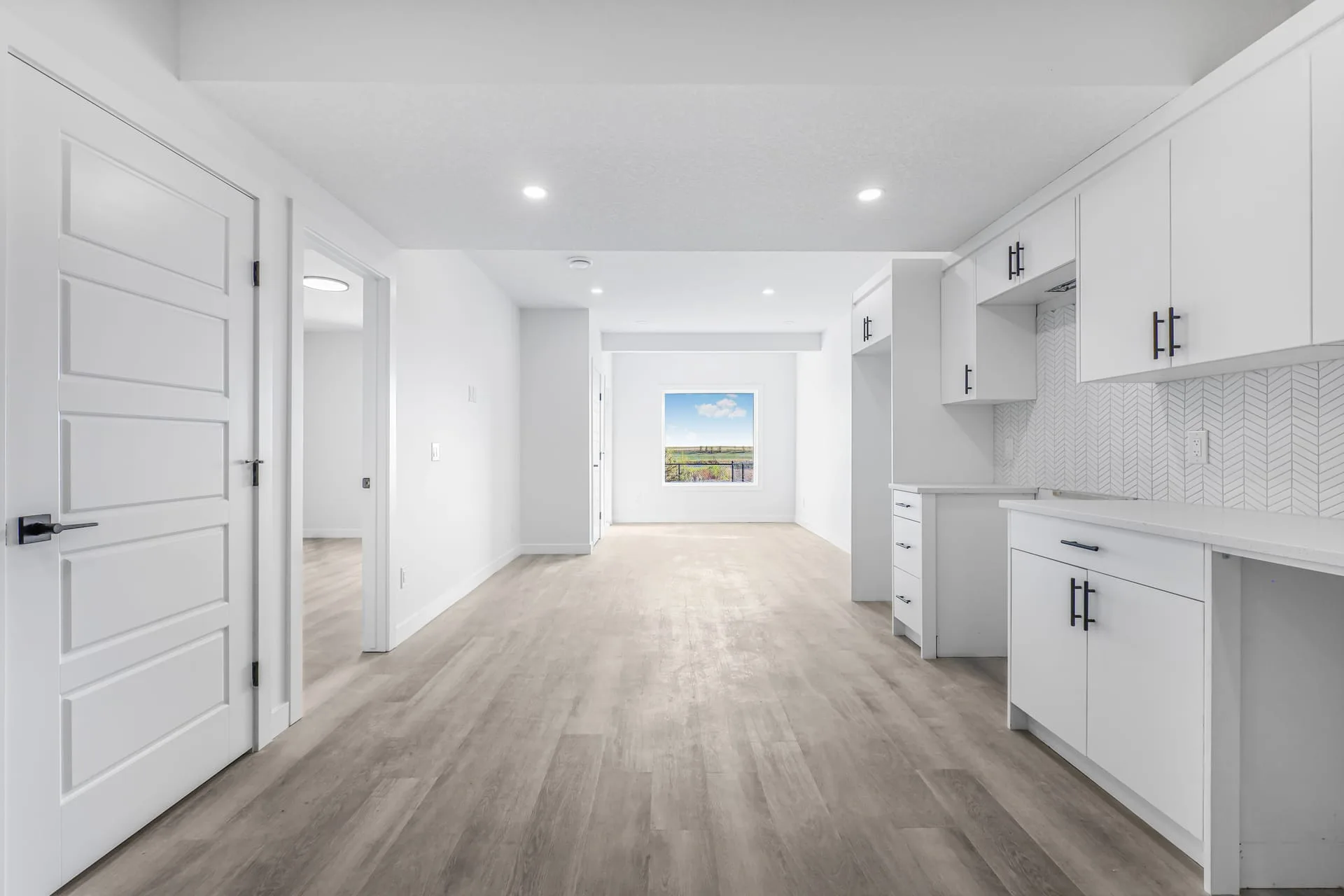
You ask three contractors for quotes on a legal suite. One comes in at $65,000. Another at $85,000. The third at $105,000. Same basement. Same scope. So why the $40,000 difference? Because most contractors don’t actually give you a “quote”. They give you a vague estimate where half the line items are hidden, misunderstood, or meant to trap you into change orders. This article teaches you how to decode quotes, spot the missing pieces, and compare apples to apples.
The Anatomy of a Contractor Quote
A real quote should have these sections:
1. Scope of Work (Detailed Description)
What exactly are you building? Example:
- Demo: Remove existing drywall, flooring, and trim from basement area (specify square footage)
- Framing: New walls, fire-rated assembly between suite and main dwelling (specify materials and method)
- Electrical: Rough-in for 8 outlets, 2 switches, separate 60-amp panel for suite (specify panel location)
Good quotes specify WHAT, WHERE, and HOW for every item. Vague quotes say “Framing work, $8,000” with no detail.
2. Material Specification (Not Just “Paint”)
What brand, finish, and grade? Example:
- “Paint: 2 coats of Sherwin-Williams ProClassic Semi-Gloss, interior walls” (cost: $1,200)
- vs. “Paint and drywall: TBD” (cost hidden, contractor surprise)
The second one is a trap. You don’t know if they’re using $5 paint or $15 paint. Specificity matters.
3. Labor Breakdown (If Fixed Price)
How many labor days/weeks per trade? Example:
- Framing: 80 labor hours at $45/hour = $3,600
- Electrical: 40 labor hours at $65/hour = $2,600
This shows you the contractor’s hourly assumption and time estimate. If another contractor quotes the same work at 120 hours, you can ask why.
4. Contingency/Allowances
Good quotes include a line item for “unknown conditions” or contingency (2 to 5% of total). Bad quotes don’t, then bill you later when surprises arise.
5. Payment Schedule
When do you pay? Examples:
- 30% upon contract, 40% at 60% completion, 30% at final inspection
- vs. “As needed throughout project” (vague and risky)
6. Timeline
How long will it take? 8 weeks? 12 weeks? By when is it complete?
7. Warranty
What workmanship term is offered, what is covered, and how are exclusions handled? Get the warranty term and claim process in writing.
Common Line Items Explained (What They Really Mean)
Framing & Structure
- “New walls + fire separation assembly”: Should include stud framing, insulation, drywall, caulking, and fire-stopping at penetrations. If the quote doesn’t itemize these, ask.
- “Egress windows + wells”: Cutting openings, installing windows, and building wells. Are window wells pre-fab or custom? Cost varies $3K-$6K depending on soil conditions and design.
- “Underpinning (if needed)”: Lowering the basement floor to meet ceiling height. This is a $15K-$30K wildcard. Get a separate quote for this before committing.
Electrical
- “Rough-in”: Wiring, outlets, switches, junction boxes, and rough inspection. Does NOT include panel or permits.
- “Separate panel”: New electrical panel for the suite (common for independent metering). Cost: $3K-$5K. Some contractors hide this or include it vaguely.
- “Permits + inspection”: Electrical permit and City inspection. Should be itemized separately, not rolled into “electrical work.”
Plumbing
- “Rough-in”: Pipes, drains, vents, fixtures rough-in. Does NOT include finished fixtures (taps, showerheads, drains covers).
- “Kitchen plumbing”: Should include hot/cold supply and drain to sink, plus gas (if cooking). Some quotes include this; others charge separate.
- “Bathroom plumbing”: Full bath = supply/drain to toilet, sink, tub/shower, plus vent stack. Cost range: $6K-$12K depending on distance from main stack.
HVAC
- “Independent heating system”: Usually means a space heater or mini-split unit (not sharing the main furnace). Cost: $4K-$8K depending on type.
- “Ductwork modification”: Extending or rerouting existing ducts for the suite. Cost: $2K-$5K. Some contractors include this in HVAC; others charge separately.
Kitchen & Bathroom Finishes
- “Kitchen: Budget line”: Usually means basic cabinets, laminate countertops, standard appliances. Cost: $8K-$13K.
- “Kitchen: Mid-range”: Semi-custom or stock cabinetry, quartz countertops, mid-range appliances. Cost: $13K-$20K.
- “Bathroom: Full”: Should include vanity, toilet, tub/shower with tile, mirrors, lighting, ventilation. Cost: $6K-$12K.
Hidden Scope Differences (Why Quotes Vary by $40K)
Underpinning (or Not)
Scenario A: Contractor A says “Your ceiling is high enough, no underpinning needed. $70,000 total.”
Scenario B: Contractor B says “Your ceiling is 6’0”, needs underpinning for 6’5” code. Add $25,000.”
Total difference: $25,000. Who’s right? Get a licensed architect to measure and assess. One contractor may be cutting corners on code compliance.
Finishes Quality
Scenario A: “Kitchen: Laminate counters, basic appliances, stock cabinets. $8,000.”
Scenario B: “Kitchen: Quartz countertops, stainless appliances, semi-custom cabinets. $15,000.”
Total difference: $7,000. This is legitimate. Premium finishes cost more. But you need to compare apples to apples.
Separate Panel vs. Shared Electrical
Scenario A: “Electrical includes sharing the main panel with breakers for the suite. $6,000.”
Scenario B: “New separate 60-amp panel for independent metering. $9,000.”
Total difference: $3,000. Separate panels cost more but provide independent control. Code often requires it for legal suites.
Contingency/Allowance
Scenario A: “Fixed price, no contingency. If anything goes wrong, change orders apply. $80,000.”
Scenario B: “Fixed price with 5% contingency for unknowns ($4,250). $84,250.”
Difference: $4,250. The second is safer. Unexpected conditions are covered without change orders.
How to Compare Quotes Properly
Step 1: Get All Quotes in Itemized Form
Ask for detailed, line-by-line quotes from all contractors. If they say “We just estimate,” that’s a red flag. Insist on itemization.
Step 2: Create a Comparison Spreadsheet
List every item (framing, electrical, plumbing, kitchen, bathroom, finishes) and the cost from each contractor. You’ll see where the differences are.
Step 3: Ask Questions on Line-Item Differences
If Contractor A quotes electrical at $6K and Contractor B at $9K, ask WHY. Is it more labor? Separate panel? Different materials? Understanding the gap is key.
Step 4: Verify Scope Assumptions
Do all three contractors assume the same:
- Ceiling height / underpinning yes/no?
- Finish quality (budget vs. mid-range)?
- Separate HVAC system or shared?
- Separate electrical panel or shared?
If assumptions differ, adjust quotes to the same scope for fair comparison.
Step 5: Choose Based on Value + Experience, Not Price
The cheapest quote isn’t the best deal. The contractor with secondary suite experience, good references, clear communication, and fair pricing is the best deal.
FAQ: Reading Renovation Quotes
Why does one contractor quote 40% more than another?
Different scope (underpinning, finishes quality, HVAC type), different labor assumptions (hours/pay rates), different margins/overhead, or missing line items in the low quote that appear as change orders later. Always get itemized quotes to identify differences.
Should I always accept the lowest bid?
No. Low bids often mean missing scope, lower quality materials, or planned change orders. Compare apples to apples. A quote 20% higher than the lowest might include contingency, warranty, and better materials. Making it the better value.
What’s a “fixed price”?
A price that doesn’t change unless you change the scope. If hidden issues arise, the contractor covers them (within reason). Fixed-price quotes protect you; hourly estimates don’t.
What if a contractor refuses to itemize?
Red flag. Walk away. A contractor who won’t itemize is avoiding accountability. Reputable contractors give detailed, line-item quotes because they stand behind them.
Should I include contingency in my budget?
Yes. Budget 5 to 10% on top of quotes for unknowns (foundation issues, old wiring, plumbing complications). This prevents financial surprises mid-project.
📨
Stay Ahead of the Curve
Join Calgary homeowners getting insider renovation tips, market updates, and exclusive cost data. Weekly. No fluff.
Get Weekly Insights
Welcome aboard! Check your inbox for a confirmation email.
Unsubscribe anytime. We respect your inbox.
Get Your Free Guide
Enter your details below and we’ll send the complete guide straight to your inbox.
What are you planning? (optional) Legal Suite Development Basement Development Garage Development Commercial Project Not Sure Yet
Send Me the Guide Sending…
We respect your privacy. Unsubscribe anytime. No spam, ever.
✓
Check Your Inbox!
Your guide is on its way. While you wait, explore more resources below.