
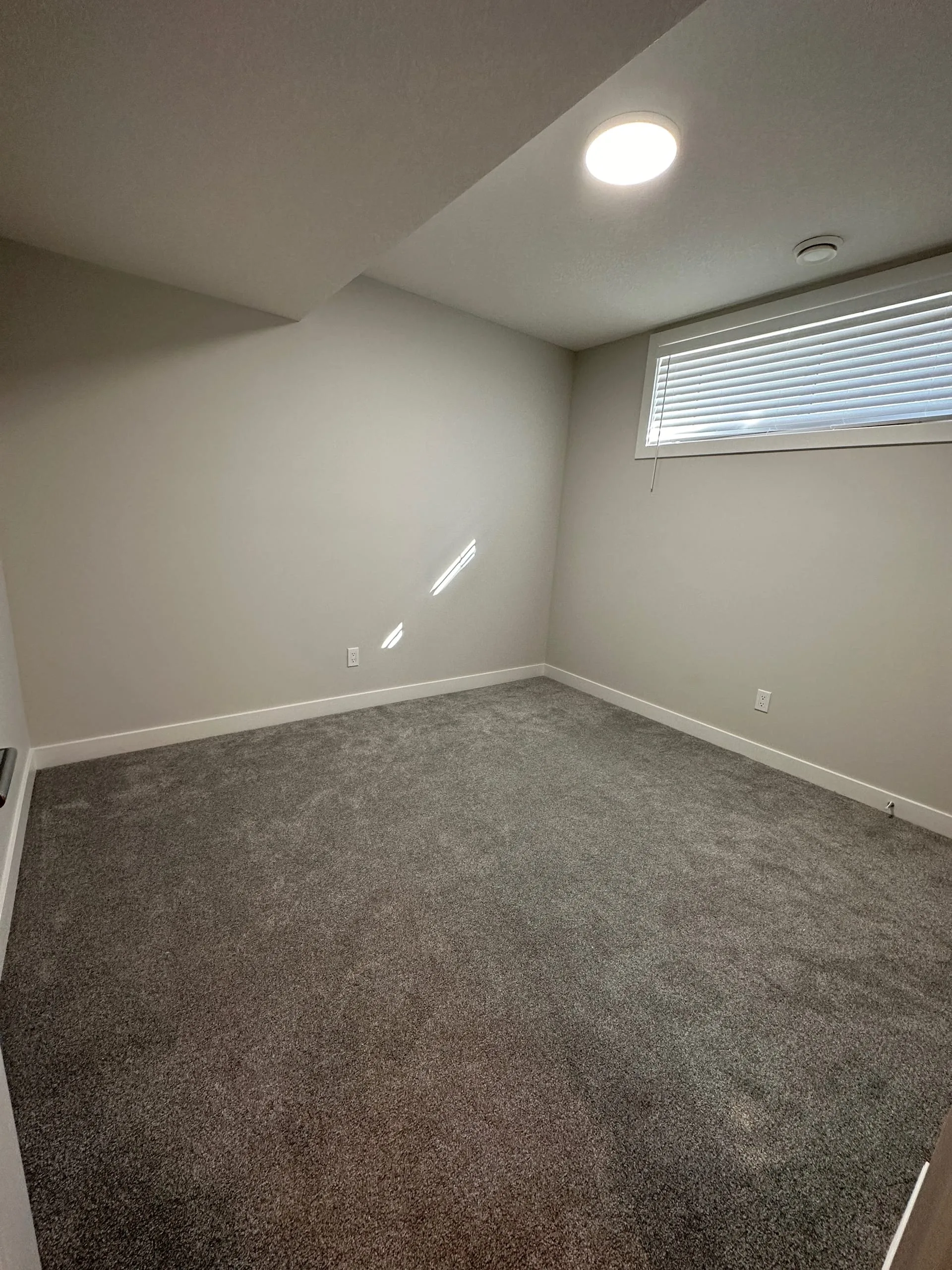
The Basement Development Process: A Step-by-Step Timeline
Starting a basement renovation can feel overwhelming. You’ve got permits to navigate, inspections to schedule, and dozens of trades working in your home. When will it be done? How many disruptions will there be? What happens at each stage? Permit triggers differ by address and scope, so use the City of Calgary’s basements guidance and confirm the current requirements before work starts.
Our Calgary project experience informs this 10-stage planning timeline, which is an OAF estimate rather than a City or trade guarantee. Permit queues, revisions, inspections, material lead times, and site conditions can extend the actual schedule from consultation to move-in.
This guide walks you through exactly what happens at each stage, what to expect, and what you need to do as a homeowner.
Stage 1: Consultation & Vision Meeting (Week 1)
What Happens
You meet with OAF for 1-2 hours. We discuss:
- Your vision: Lifestyle basement or legal secondary suite?
- Space needs: Bedroom count, bathroom, living areas?
- Budget: Are you looking at $45K-$70K range?
- Timeline: When do you need it ready?
- Current basement conditions: Moisture issues? Structural concerns?
Deliverables
You’ll get a preliminary scope outline and a timeline estimate. We’ll also take photos and notes of your space.
What You Need to Do
Prepare a list of must-haves and nice-to-haves. Have photos from Pinterest of spaces you like. Know your realistic budget.
“The first meeting isn’t about signing a contract. It’s about understanding if we’re a good fit and if your vision is achievable within your budget.”
Stage 2: Design & Planning (Weeks 2-3)
What Happens
OAF develops detailed floor plans, electrical layouts, HVAC schematics, and plumbing diagrams. We’ll iterate with you on:
- Room layouts (bedroom size, bathroom position)
- Finishes (flooring, paint, lighting)
- Building code requirements for Calgary (ceiling height, egress windows, fire separation)
- Structural considerations (load-bearing walls, support beams)
Deliverables
You’ll receive a complete design package with floor plans, elevation drawings, materials list, and a detailed Fixed-Price Agreement.
What You Need to Do
Review the plans carefully. Ask questions. Approve the design and sign the contract. This is when you’re locked into scope (though you can always add or modify with change orders).
Stage 3: Permits & Approvals (Weeks 3-6: 2-6 week timeline varies)
What Happens
OAF submits the permits required for the approved scope to the City of Calgary. Depending on the work, this can include:
- Basement renovation permit (defines scope, dimensions, materials)
- Electrical permit (for rough-in and final inspection)
- Plumbing permit (for rough-in and final inspection)
- HVAC permit (for ductwork and ventilation)
For planning, allow roughly 2-4 weeks for a straightforward building-permit review. The City’s live requirements and queue control the actual timing, and a legal secondary suite can require an additional development-permit review.
Deliverables
Once approved, you get a permit number and work can legally begin.
What You Need to Do
Post the permit visibly on your home. Ensure city inspectors can access your basement when they show up.
Permit Delays Happen
Calgary permitting can take longer than the planning range during busy periods or when the City requests revisions. That risk is built into our estimate, but the City controls its review queue; we’ll keep you updated.
Stage 4: Demolition & Prep (Week 6-7)
What Happens
Once permits are approved, demolition crews arrive. They:
- Remove existing flooring (if applicable)
- Demo existing walls or partitions being relocated
- Remove old utilities (abandoned pipes, outdated wiring)
- Clean the space
- Grade concrete floor if needed
Timeline
Demolition typically takes 3-5 days, depending on scope.
What You Need to Do
Secure access to the basement for crews. Expect noise and dust. We provide plastic sheeting to contain dust in upper floors, but prepare yourself.
Stage 5: Rough-In (Weeks 7-10)
This is the most complex stage. Multiple trades work simultaneously:
Framing
Framers build new walls, install headers, and create the basic structure. They coordinate with:
- Electrical: Identifies where outlets, switches, and panels will go
- Plumbing: Marks rough-in locations for drain lines and water lines
- HVAC: Ensures ductwork pathways are clear
Timeline: 5-7 days
Electrical Rough-In
Licensed electrician installs:
- Sub-panel or circuit extensions
- Conduit, wire, and boxes
- GFCI protection in wet areas
- Dedicated circuits for high-load areas (kitchen, laundry)
Timeline: 3-5 days Inspection: City electrical inspector verifies before walls close
Plumbing Rough-In
Licensed plumber installs:
- Drain lines (with proper slope for gravity flow)
- Water supply lines (hot and cold)
- Vent stacks (critical for proper drainage)
- P-traps and cleanouts
Timeline: 3-5 days Inspection: City plumbing inspector verifies before walls close
HVAC Rough-In
HVAC technician installs:
- Return air ductwork (pulls air from basement to furnace)
- Supply ductwork (pushes conditioned air into basement)
- Registers and grilles
- Exhaust for bathrooms/kitchens
Timeline: 3-5 days Note: HVAC doesn’t require city inspection but must meet code
Why Rough-In Coordination Matters
All trades need to coordinate on positioning. Electrical wants outlets at certain heights. Plumbing needs drain lines at certain slopes. Framing needs to support it all. One mistake (like a stud in the wrong place) can cascade into delays.
Stage 6: Inspections (Mid-Phase)
What Happens
After rough-in, city inspectors verify electrical, plumbing, and structural work before walls close up. If anything doesn’t meet code, contractors must fix it. This prevents costly rework later.
Timeline
Schedule inspections with the city 1-2 weeks before you want them. Inspection day: 1-2 hours. If approved, walls can close. If issues found, contractors fix and re-inspect (usually within 1 week).
What You Need to Do
Ensure city inspectors can access your basement. We typically schedule these and coordinate, but you may need to be home.
Stage 7: Insulation & Drywall (Weeks 10-13)
Insulation
Once rough-in is approved, insulation crews install:
- Closed-cell spray foam on exterior walls (best for basements: repels moisture, creates air seal)
- XPS rigid foam on some walls (alternative: cheaper, less effective but still good)
- Vapor barrier on concrete floor before flooring
Timeline: 1-2 days
Drywall
Drywall contractors hang, tape, and mud all walls. This is what transforms rough framing into finished-looking spaces.
- Hanging: 2-3 days
- Taping/mudding: 3-4 days (requires multiple coats, drying time between coats)
- Sanding: 1-2 days
What You Need to Do
Be prepared for dust again during drywall sanding. Expect plaster dust in your home for a few days.
Stage 8: Finishing (Weeks 13-15)
Flooring
Once drywall is complete and painted, flooring goes in. Common basement flooring:
- Luxury vinyl plank (LVP): $5-10/sq ft installed. Waterproof, durable, looks like wood.
- Porcelain tile: $4-8/sq ft installed. Moisture-proof, can be cold underfoot.
- Carpet (limited areas): Not recommended in basements due to moisture.
Timeline: 2-4 days (depending on area size)
Paint
Painters finish all walls (after drywall is sanded). Basement paint should be moisture-resistant.
Timeline: 2-3 days
Fixtures & Hardware
Electrician installs fixtures (lights, outlets, switches). Plumber installs fixtures (toilet, sink, faucet). Carpenters may install trim.
Timeline: 3-5 days combined
What You Need to Do
Have all fixture selections finalized before this stage. Delays in choosing materials slow everything down.
Finishing Stage Choices Matter
Budget for finishing items: flooring ($3K-8K), paint ($800-1.5K), fixtures ($2K-5K). These are where homeowners customize their space. Choices made early in design can save thousands.
Stage 9: Final Inspection & Occupancy (Week 15-16)
What Happens
City inspectors return for a final inspection. They verify:
- All rough-in work completed per permit
- All finishes completed
- No code violations
- Safety features in place (egress window for bedrooms, fire separation if applicable)
Deliverables
Once approved, you get a Certificate of Occupancy or final permit sign-off. This is now a legal space.
What You Need to Do
Schedule the final inspection with the city. Have the contractor walk through with you beforehand to ensure everything is ready.
Stage 10: Walkthrough & Warranty (Week 16+)
What Happens
OAF walks through the entire space with you. We test every fixture, verify every finish, and address any final punch-list items. You’ll receive:
- Warranty documentation tied to the written project agreement and manufacturer terms
- Operating manuals for HVAC, electrical, plumbing
- Permit documentation from the city
- Contact info for ongoing support
What You Need to Do
Point out any issues or incomplete items. We’ll fix them. After you’re satisfied, you take occupancy.
Pro Tip: Document Everything
Take photos and videos of the final space. Keep all warranty documents and permits in one folder. If issues arise later (rare with quality work), you’ll have documentation.
Complete Timeline Breakdown
| Stage | Duration | Start Week | End Week | Key Deliverable |
|---|---|---|---|---|
| Consultation | 1 week | 1 | 1 | Scope outline |
| Design & Planning | 2 weeks | 2 | 3 | Approved plans & contract |
| Permits | 2-4 weeks | 3 | 6 | City approval |
| Demolition & Prep | 1 week | 6 | 7 | Blank slate |
| Rough-In (all trades) | 3-4 weeks | 7 | 10 | Framing, electrical, plumbing, HVAC installed |
| Inspections | 1 week | 10 | 10 | City approval to close walls |
| Insulation & Drywall | 2 weeks | 10 | 13 | Walls finished, ready for paint/flooring |
| Finishing (paint, flooring, fixtures) | 2 weeks | 13 | 15 | Fully finished space |
| Final Inspection | 1 week | 15 | 16 | Certificate of Occupancy |
| Walkthrough & Occupancy | 1 week | 16 | 16 | Keys, warranty docs, occupancy |
What Can Change This Timeline?
Delays (add 1-4 weeks)
- Permit delays: City busy season can extend permits by 2+ weeks
- Hidden issues: Structural problems discovered during rough-in might require engineering (add 1-2 weeks)
- Trade scheduling: Booked contractors might not be available immediately (add 1-2 weeks)
- Material backorders: Custom fixtures or materials might be backordered (add 1-2 weeks)
- Inspection failures: Code violations found during inspection require rework (add 1 week)
Accelerators (shorten by 1-2 weeks)
- Clear scope: Homeowners who finalize all decisions early avoid delays
- Quick approvals: City permits might approve faster in off-season
- Simple scope: Basic basement without complexities finishes faster
- No hidden issues: Clean basement structure = no surprises
Frequently Asked Questions
Can work happen during winter?
Yes. Basements are indoors, so winter doesn’t stop work. However, material delivery might be slower, and some trades prefer warmer weather. Winter timelines are typically same as summer.
What if I’m living upstairs during construction?
Expect noise during framing (power tools), dust during drywall, and temporary access disruptions. Most homeowners find it livable. We minimize disruptions, but it’s not silent.
Can you start before permits arrive?
Do not start permit-triggering work until the required permit is issued. The City can require work to stop or be inspected when work begins without approval; confirm the exact enforcement and permit trigger with the City for your scope.
What if I want to add something mid-project?
You can add items up to certain stages (before walls close, for instance). Later additions cost more because rework is involved. Plan ahead to minimize mid-project changes.
Who’s responsible if inspections fail?
OAF ensures all work meets code before inspection. If an inspection fails, we fix it at no extra cost. Our reputation depends on passing first-time.
Common Challenges at Each Stage
Stage 3: Permit Delays
Calgary permit timing varies by season and complexity. OAF has seen straightforward files move faster and revised or complex files take longer. What causes delays?
- Incomplete application (missing drawings, calculations)
- Code interpretation questions (inspector unsure how to apply a rule)
- Busy season (spring/summer, everyone’s applying)
- Plan revisions required (inspector requests changes)
How OAF mitigates: We prepare permits thoroughly before submission. We have relationships with Calgary inspectors and know common issues. We follow up proactively if permits stall.
Stage 5: Trade Scheduling Conflicts
You want framing, electrical, plumbing, and HVAC all happening simultaneously. But trades get booked. What if the electrician isn’t available until your framing is done?
Solution: OAF maintains relationships with licensed trades and books them months in advance for confirmed projects. We stagger work to ensure continuous progress.
Stage 6: Failed Inspections
City inspector finds code violation: “This outlet needs GFCI protection” or “This vent pipe is sloped wrong.” Now the contractor has to fix it and re-inspect. Add 1-2 weeks.
How OAF avoids this: Our teams know Calgary code cold. We build to code the first time. Failed inspections are rare (less than 5% of projects). When they happen, we fix immediately.
Stage 7-8: Material Backorders
You want a specific fixture (custom vanity, specific flooring). It’s backordered 12 weeks. Now your timeline extends by a month, or you substitute.
Solution: Finalize all material selections 4-6 weeks before that phase starts. Order long-lead items early. Have backup options if primary choice is unavailable.
Stage 10: Warranty Claims
After move-in, you notice drywall crack, floor gap, or fixture malfunction. Who fixes it? Is it covered under warranty?
OAF’s approach: a documented 5-year workmanship warranty covers defects in our work (cracks from framing settling, poor taping, etc.). Manufacturer warranties cover material failures (fixture stops working). We return promptly to fix warranty items.
Can You Accelerate the Timeline?
Some homeowners want the project done faster. Is that possible?
Yes, You Can Accelerate Stages 1-3
- Stage 1 (Consultation): Schedule immediately. Takes 2 hours. Can’t accelerate.
- Stage 2 (Design): Provide clear preferences upfront. OAF can design in 1 week instead of 2 if you’re decisive. Make decisions quickly = faster design.
- Stage 3 (Permits): Submit permit application immediately after design approval. You can’t speed the city’s review (2-4 weeks is typical), but you can avoid delays by being responsive.
Limited Acceleration in Stages 4-10
Construction phases have dependencies. Framing must finish before electrical. Electrical must finish before walls close. You can run trades in parallel (framing + HVAC simultaneously), but each phase is sequential.
OAF optimizes parallel work, but realistic acceleration is 1-2 weeks max (10-16 weeks becomes 8-15 weeks).
Fast-Track Projects: Overlapping Design & Permits
Some contractors offer “fast-track” projects where design and permitting happen in parallel. Trade-off: higher fees, more rework risk, less time to plan.
OAF’s philosophy: Better to take 3 weeks planning than 12 weeks fixing mistakes. We don’t fast-track because our clients prefer certainty over speed.
What Homeowners Must Do at Each Stage
Stage 1-2: Be Decisive
Make decisions fast. Don’t drag out consultations or design reviews. The faster you approve plans, the faster we move to permits.
Stage 3: Respond to Questions
City might ask design questions during permit review. Respond immediately. Delays here cascade through entire timeline.
Stage 4-10: Provide Access
Ensure crews can access basement. Remove obstacles. If you have a crawl space entry, keep it clear. If you have egress windows, clear those too.
Stage 8: Finalize Fixture Selections
By week 13, all finishes must be chosen. Changing paint color mid-week 13 is fine. But changing flooring type = delay.
Stage 9: Schedule Final Inspection
You or OAF schedules with the city. Have someone home for the inspection. If the inspector finds issues, they’ll work with us to reschedule.
Stage 10: Do Walkthrough
Walk through with OAF before final payment. Point out any punch-list items (small things not perfect). We’ll fix them.
Winter Construction in Calgary
Calgary winters are real. Does construction stop?
Short answer: No. Basements are indoors and temperature-controlled. Winter doesn’t halt basement renovation.
Longer answer: Some trades prefer warmer months and material delivery might be slower in winter. Interior schedule impact depends on the approved scope, trade availability, inspections, and any exterior work; do not assume winter and summer timelines are identical.
One caveat: If your project involves roofwork or exterior work, winter adds 2-4 weeks. Pure basement work? Winter = no delay.
The Bottom Line
A typical Calgary basement renovation takes 10-16 weeks from consultation to occupancy. Most of that time is permits (2-4 weeks) and construction phases (8-12 weeks). The timeline is predictable if scope is clear and decisions are made early.
OAF’s process is designed to minimize surprises and keep you informed at each stage. You’ll know what’s happening next week and what happens next month.
Questions about your specific timeline? Get a Free Quote. We’ll walk through your project stage-by-stage.
📧
Stay Ahead of the Curve
Join Calgary homeowners getting insider renovation tips, market updates, and exclusive cost data. Weekly. No fluff.
Get Weekly Insights
Welcome aboard! Check your inbox for a confirmation email.
Unsubscribe anytime. We respect your inbox.
Get Your Free Guide
Enter your details below and we’ll send the complete guide straight to your inbox.
What are you planning? (optional) Legal Suite Development Basement Development Garage Development Not Sure Yet
Send Me the Guide
We respect your privacy. Unsubscribe anytime. No spam, ever.
✓
Check Your Inbox!
Your guide is on its way. While you wait, explore more resources below.
Related reading
- How Much Does Basement Development Cost in Calgary? (2026 Prices)
- Calgary Basement Development Service
- Calgary SSIP Grant: Up to $10,000 for Legal Suites
- Backyard Suite Incentive Program
Sources: City of Calgary basements guidance; secondary-suite permit requirements; and secondary-suite permit costs and timelines. OAF stage durations are planning estimates, not guarantees. Reviewed September 1, 2026; confirm current permit triggers and review queues with the City for the property.