
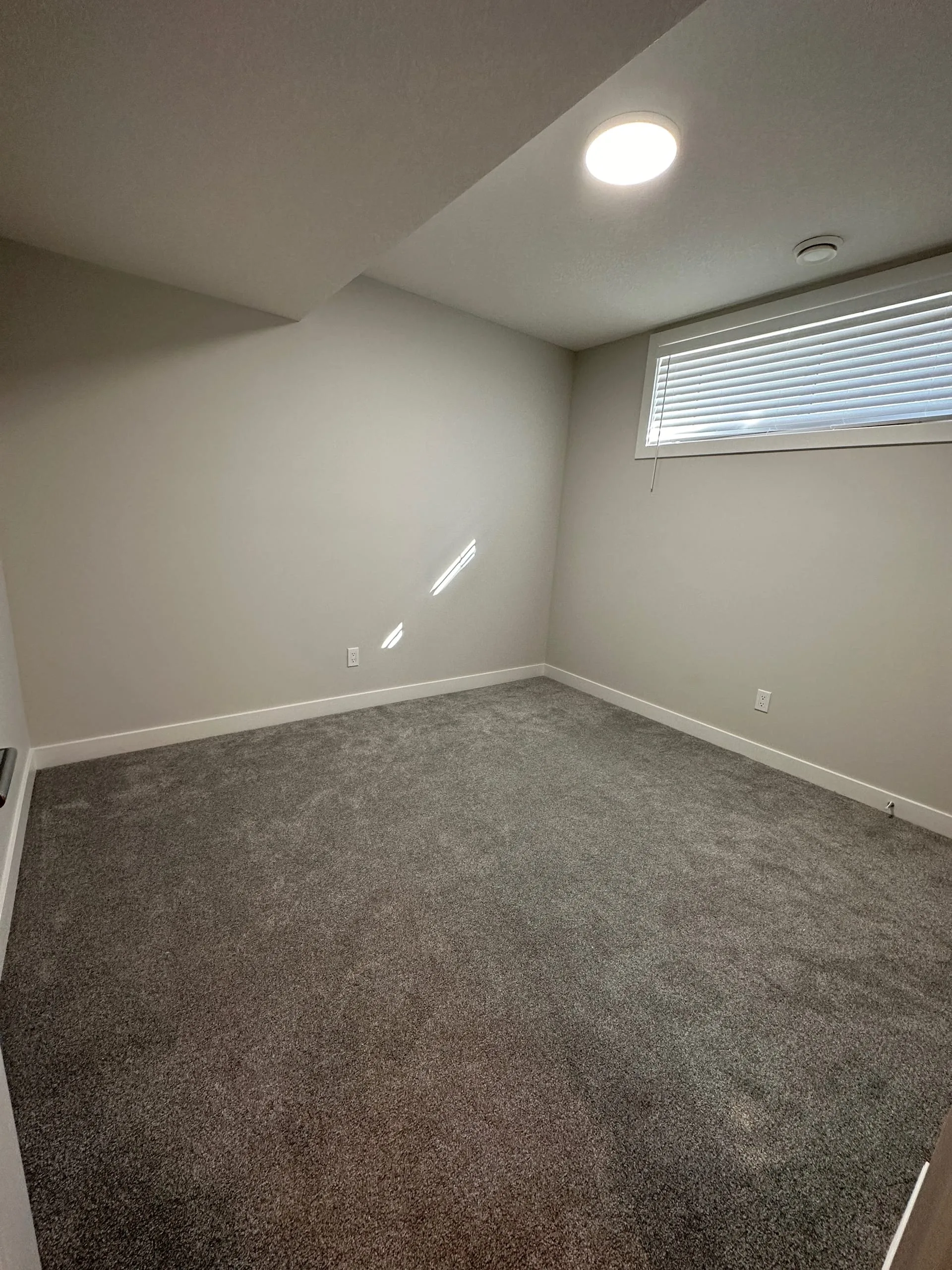
The DIY Temptation vs. The Pro Advantage
We see it every month: homeowners walk into their basements with renovation dreams and a YouTube playlist, convinced they can save $10,000-$30,000 by doing it themselves. Sometimes they succeed. More often, they end up calling us to fix what went wrong-which costs MORE than hiring a pro from day one.
This article breaks down what you can actually DIY in a Calgary basement renovation, what you absolutely shouldn’t touch, cost comparisons, and the liability issues that keep us up at night when talking to homeowners.
What You CAN DIY (And Actually Save Money)
Let’s start with the good news. There are legitimate opportunities to reduce costs by handling some tasks yourself:
Painting
This is your sweet spot. Painting is low-risk, forgiving, and makes a massive visual impact. A professional painter charges $1,500 to $2,500 for a finished basement. If you invest $200 in quality paint and supplies, you can knock this out yourself. The only gotcha: prep work (drywall cleanup, patching, taping) takes 3x longer than people expect.
DIY Cost: $200 to $400 in materials | Pro Cost: $1,500 to $2,500 | Savings: $1,100 to $2,100
Flooring (Vinyl Plank or Laminate)
If you’re comfortable with basic tools and can measure accurately, vinyl plank flooring (LVP) is installable by homeowners. It’s forgiving, snaps together, and mistakes are repairable. Laminate is similar but slightly trickier. Both require underlayment and careful layout.
DIY Cost: Materials + 4 to 6 days of your time | Pro Cost: $2,500 to $4,500 for labor + materials | Savings: $1,500 to $3,000
Pro Tip: The Reveal
Watch a full installation tutorial on YouTube before you commit. If you see yourself confident doing that, go for it. If you see yourself cursing at subfloors at 11 PM, call a pro.
Trim and Baseboard Installation
Baseboard and trim require a miter saw, patience, and an eye for detail. It’s doable if you’re handy, but mistakes are visible forever. A professional finishes a 1,200 sq ft basement in 2 to 3 days; DIY homeowners often spend 6 to 8 days and still miss details.
DIY Cost: Materials + time | Pro Cost: $1,000 to $2,000 | Savings: $800 to $1,800
Drywall Finishing (If You’re Ambitious)
Taping, mudding, and sanding drywall is an acquired skill. It’s absolutely DIY-able, but it takes practice to get a finish that doesn’t look like crumpled paper under primer. Budget extra time and expect to redo some sections.
DIY Cost: $300 to $500 in materials | Pro Cost: $1,500 to $3,500 | Savings: $1,000 to $3,000
What You SHOULDN’T DIY (And Why)
Electrical Work
This is non-negotiable in Alberta. Electrical work requires a licensed electrician. Period. Why?
- Code Compliance: Calgary has strict electrical codes. Improper wiring can void your home insurance, fail inspections, and make your home uninsurable.
- Fire Risk: Faulty electrical work causes fires. This isn’t hyperbole. Basement fires spread fast.
- Permit Requirements: Any electrical work requires a permit and inspection. DIY electrical won’t pass City inspection.
- Safety: Electrocution. Enough said.
Licensed Electrician Cost: $3,000 to $8,000 for a full basement | This is Non-Negotiable
Plumbing (Especially for Legal Suites)
If you’re adding a bathroom or kitchenette, plumbing is not a DIY project. Why?
- Code Compliance: Pipe sizing, slope, venting, and trap requirements are strict. Calgary inspectors reject DIY plumbing regularly.
- Leaks: A plumbing leak in a basement can cost $10,000+ in water damage and mold remediation. The $500 you saved isn’t worth it.
- Legal Suites: For legal secondary suites, ALL plumbing must be done by a licensed plumber. Period.
Licensed Plumber Cost: $2,500 to $6,000 | This is Non-Negotiable for Suites
Structural Work and Load-Bearing Walls
If you’re removing walls, installing beam supports, or doing any structural modification, this requires:
- A structural engineer (cost: $800 to $2,000)
- A licensed contractor with experience in structural work
- City permit and inspection
Removing a load-bearing wall without proper support can literally cause your home to collapse. Don’t DIY this.
HVAC Design and Installation
Extending your furnace and air conditioning to a basement requires proper ductwork sizing, return air design, and balancing. HVAC professionals charge $3,000 to $8,000, but this ensures your comfort system works. DIY attempts often result in cold spots, unbalanced zones, and insufficient return air-which actually makes your HVAC work harder and costs more in utilities.
Waterproofing and Moisture Management
This is the #1 reason basement renovations fail. If you don’t address moisture properly, you’re setting up for mold, efflorescence, and water damage. Proper waterproofing requires:
- Moisture testing and assessment ($300 to $600)
- Professional-grade waterproofing materials and installation ($2,000 to $5,000)
- Proper grading and drainage around your foundation
Cost Comparison: Full DIY vs. Pro vs. Hybrid
| Approach | Direct Cost | Time Investment | Quality | Risk |
|---|---|---|---|---|
| Full DIY (Risky) | $25,000 to $35,000 | 8 to 12 weeks evenings + weekends | Variable (often poor) | Very High |
| 100% Professional | $45,000 to $65,000 | 6 to 8 weeks (your time: minimal) | Excellent | Low (warranty + insurance) |
| Smart Hybrid (Recommended) | $35,000 to $50,000 | 6 to 8 weeks (pros) + 40 hours (you) | Excellent | Low |
“We’ve torn out and redone more DIY electrical and plumbing work than we care to admit. The cost to fix it usually exceeds what a pro would have charged from the start. And that’s before considering the safety risk.”
The Hybrid Approach: Smart DIY
Here’s what we recommend: hire professionals for structural, electrical, plumbing, HVAC, and waterproofing. Do the finishing work yourself:
- Weeks 1 to 4: Pros handle framing, electrical, plumbing, HVAC, waterproofing
- Week 5: Drywall hung by pros, taping/mudding by you (or pros if you want perfection)
- Week 6: Flooring installed by pros or DIY (depending on type)
- Week 7: You paint, install trim, do finish details
- Week 8: Inspections, final touches, move-in
This approach gives you savings (DIY painting + trim), professional-grade execution on critical systems, and a finished product you’re proud of.
The Hidden Costs of DIY Mistakes
Permit Rejection and Rework
The City of Calgary inspects basements (especially legal suites). If your electrical or plumbing doesn’t meet code, the City orders you to rip it out and redo it. That $3,000 you saved turns into $6,000 in rework costs.
Insurance Issues
If you DIY electrical or plumbing and don’t disclose it to your insurance company, they can deny claims related to those systems. A basement fire from faulty DIY wiring? Insurance company says “not covered.”
Resale Impact
Buyers and their inspectors ask for proof of permits and licensed work. DIY work raises red flags. You might shave $10,000 off the project cost but lose $20,000 in resale value when a buyer’s inspector spots unpermitted work.
The Time Cost
Don’t underestimate your time. If you’re taking vacation days or working evenings for 8 weeks, that has value. At a conservative $50/hour, 320 hours of DIY work = $16,000 in labor value. Suddenly, the “savings” disappear.
Liability and Insurance
Here’s what keeps liability lawyers busy:
- Injury on your site: If someone gets hurt during DIY work and you don’t have proper insurance, you’re personally liable.
- Property damage: Water damage, electrical fire, or structural failure from DIY work? Your homeowner’s insurance might not cover it if it’s DIY.
- Unpermitted work: If you DIY work that requires a permit and don’t get one, you’re violating City bylaws. Fines and forced rework.
Licensed contractors carry general liability insurance, workers’ compensation, and bonding. That’s protection for you.
⚠️ Important: Disclosure
If you plan to sell or refinance your home in the next 10 years, disclose ALL work you’ve done-DIY or pro. Hiding unpermitted work is fraud and can result in forced rework, legal action, and loss of resale value.
The Bottom Line
You can save money on a basement renovation with a hybrid approach: hire licensed pros for structural, electrical, plumbing, and HVAC work. Handle finishing work (painting, trim, easy flooring) yourself. This balances cost, quality, and safety.
But don’t let YouTube confidence lead you into electrical or plumbing DIY. It’s not worth the risk, the liability, or the eventual rework cost.
If you want to discuss what parts of YOUR basement project are DIY-worthy, get a free quote with our team. We’ll walk through your space and give honest guidance on where you can save money and where you should hire a pro.
Next Steps
- Get a professional assessment of your basement (moisture, structural, electrical capacity)
- Decide your hybrid approach: what you’ll DIY, what the pros handle
- Budget 8 weeks for the full project timeline
- Hire licensed contractors for critical systems
- Get all permits and inspections done properly
📨
Stay Ahead of the Curve
Join Calgary homeowners getting insider renovation tips, market updates, and exclusive cost data. Weekly. No fluff.
Get Weekly Insights
Welcome aboard! Check your inbox for a confirmation email.
Unsubscribe anytime. We respect your inbox.