
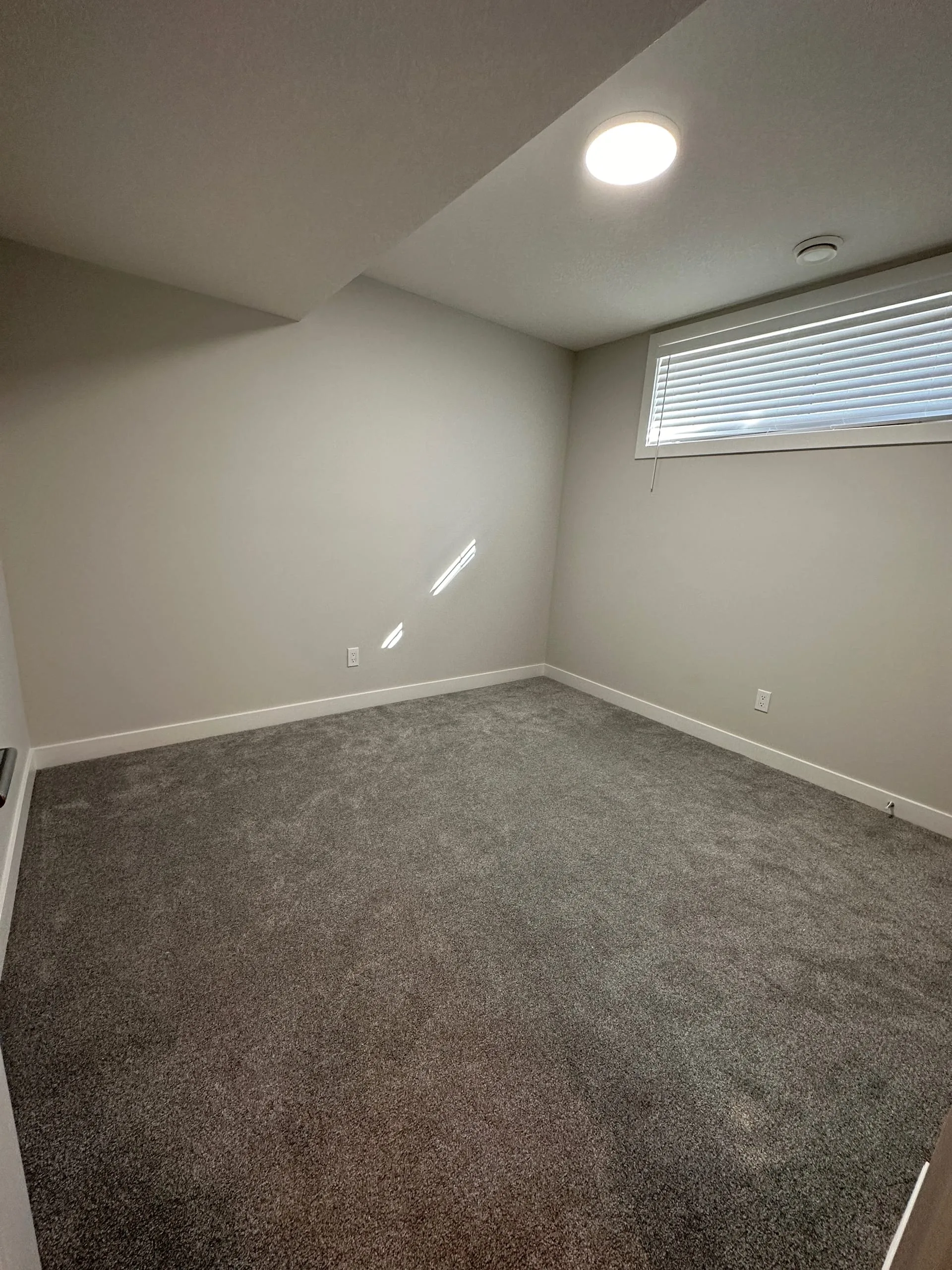
From Wasted Space to Livable Space: The Art of Basement Layout
You walk into your unfinished basement and see a blank canvas. Lots of square footage. Probably drafty. But it’s all potential.
Then you start planning. Should the bedroom be here or there? Where does the HVAC go? How many bathrooms? Where’s the mechanical room? And suddenly, bad layout decisions force you to choose: lose square footage, lose functionality, or spend another $10,000 reworking things.
Layout planning happens BEFORE construction. Get it right, and your basement feels spacious and flows well. Get it wrong, and you’re cramped and frustrated for decades.
Basement Layout Principles
Principle 1: The Mechanical Room Must Come First
Your mechanical room houses the furnace, hot water tank, electrical panel, and HVAC equipment. It’s not glamorous, but it dictates everything else.
Typical mechanical space needs:
- Furnace: 3 ft x 3 ft footprint (for a typical home)
- Water heater: 2 ft x 2 ft
- Electrical panel: 1 ft x 2 ft
- Clearance around all equipment: 18 to 24 inches (per code, for maintenance)
Total space: 100 to 150 sq ft (for a small mechanical room).
Location: Typically near your main floor furnace (often in a corner or utility area). Putting it in a remote corner of the basement costs $ in extra ductwork and plumbing.
Cost implication: If you place mechanical room poorly, you lose usable space AND pay more for extended runs. Plan it first.
Principle 2: Separate Wet and Dry Zones
Wet zone: Bathroom, laundry, mechanical room (hot water, furnace humidifier). These require plumbing and drainage.
Dry zone: Bedrooms, living areas, recreation areas. These don’t need plumbing.
Grouping wet-zone rooms saves thousands in plumbing costs and simplifies layout.
Example layout:
- One corner: Mechanical room + bathroom + laundry (all plumbing runs together)
- Rest of basement: Dry zones (bedrooms, living spaces)
Cost impact: Bathroom placed far from plumbing adds $1,500 to $2,500 in extra drain and vent work. Keep bathrooms and laundry together with the mechanical room.
Principle 3: Plan for Return Air Early
Return air ducts need a path from the basement back to the furnace. This takes space and routing.
Two options:
- Through the rim joist: Requires a 6 to 8 inch duct running horizontally. Usually hidden behind a soffit or in the rim cavity. Plan soffit location early.
- Through a soffit: Build a dropped ceiling (soffit) in a hallway to run ductwork. Plan soffit width and height early.
If you ignore return air during layout and add it later, you’re cutting into finished space or reworking drywall. Plan it from the start.
Principle 4: Maximize Natural Light
Basements are dark. Any windows or light wells should be positioned intentionally.
For bedrooms: Windows are required (egress windows for legal suites). Place beds and work areas to maximize that light.
For living areas: Windows (even small ones) make huge psychological difference. Arrange furniture to face windows, not corner them.
For light wells: If adding light wells (below-grade windows), position them where they brighten the space (not at the back of a room).
Principle 5: Open Concept vs. Closed Rooms
Open concept: Large, open living/dining/kitchen area. Fewer walls. Feels spacious. Good for small basements (600 to 800 sq ft). Cost savings: fewer walls = less framing, drywall, finishing.
Closed concept: Separate rooms (bedrooms, home office, media room, playroom). More privacy. Good for legal suites or large basements. More walls = more cost.
Hybrid: Open living area + separate bedrooms. Best of both worlds. Most common in Calgary.
Room Sizing Guidelines
| Room Type | Minimum Size (Code) | Comfortable Size | Notes |
|---|---|---|---|
| Master Bedroom | 70 sq ft (7x10) | 120 to 150 sq ft | Legal suite: 70 sq ft minimum |
| Secondary Bedroom | 70 sq ft (7x10) | 100 to 120 sq ft | Legal suite: 70 sq ft minimum |
| Bathroom | 35 sq ft (5x7) | 50 to 75 sq ft | Half-bath can be 20 sq ft |
| Kitchen/Kitchenette | 60 sq ft (suite) | 100 to 150 sq ft | Linear layout: 8ft counter minimum |
| Living/Dining | 150 sq ft (suite) | 200 to 300 sq ft | Open concept: can be larger |
| Mechanical Room | 80 to 100 sq ft | 120 to 150 sq ft | Must include clearance around equipment |
| Laundry Area | 30 sq ft | 50 sq ft | Can be in mechanical room or separate |
Traffic Flow: The Forgotten Detail
People move through basements from the stairs to rooms. If your layout forces people through bedrooms to reach living areas, it’s a bad layout.
Good traffic flow: Stairs open to a main living area or hallway. Bedrooms branch off without being crossed through.
Bad traffic flow: Stairs open to a hallway that forces people through a bedroom to reach the living area.
Design rule: Create a “spine” (main hallway or living area) and branch rooms off it. Don’t chain rooms in a line.
The Three Basement Archetypes
Archetype 1: Legal Secondary Suite (Self-Contained)
Size: 800 to 1,200 sq ft
Layout:
- Separate entrance (if possible, otherwise use main stairs)
- Living/dining/kitchen (open concept, ~150 to 200 sq ft)
- 1 to 2 bedrooms (70 to 100 sq ft each)
- 1 full bathroom (50 sq ft)
- Mechanical room with separate entrance access (if shared with main home)
Key: All rooms must be accessible without going through other units. Every room needs a door.
Archetype 2: Lifestyle Basement (Family Recreation)
Size: 1,000 to 1,400 sq ft
Layout:
- Open living/recreation area (300 to 500 sq ft)
- Home office or den (100 to 150 sq ft)
- Guest bedroom (100 to 120 sq ft)
- Full bathroom (50 sq ft)
- Storage/mechanical (100 sq ft)
- Flex space (media room, playroom, workshop)
Key: Open main area with private rooms branching off.
Archetype 3: Mixed Use (Suite + Recreation)
Size: 1,200 to 1,600 sq ft
Layout:
- Separate self-contained suite (600 to 800 sq ft, with own kitchen)
- Secondary recreation area or guest space (400 to 600 sq ft, shared kitchen with main floor)
- Shared bathroom and mechanical
Key: Clear separation between suite and shared space.
Electrical Outlet and Lighting Planning
Rough-in your electrical before framing. This saves cost and avoids awkward placement.
Outlet guidelines:
- One outlet every 6 feet on walls
- Dedicated circuits for laundry (20A), bathroom (20A), kitchen (20A or larger)
- GFCI outlets in bathroom and laundry (code requirement)
- Plan TV and audio locations early (in-wall wiring is cheaper during framing)
Lighting guidelines:
- Recessed lights every 8 to 10 feet in main living areas
- Accent lighting for kitchen and bathroom
- Wall sconces in bedrooms
- Dimmer switches for ambiance (especially living areas)
Layout Checklist Before You Frame
- Mechanical room location decided (and clearance planned)
- Bathroom/laundry grouped near mechanical (wet zone)
- Return air path planned (soffit location confirmed)
- Traffic flow sketched (no routing through bedrooms)
- Windows/egress windows positioned (bedroom windows to bed areas)
- Electrical rough-in plan finalized (outlets, circuits, special runs)
- Lighting layout planned (no dark corners)
- Room sizes confirmed against code minimums
- Storage/closet space allocated (basements often lack storage)
- Door swing directions confirmed (don’t block traffic)
The OAF Approach to Basement Layout
We bring an experienced designer into the conversation early. They help:
- Position mechanical room efficiently
- Plan wet vs. dry zones
- Maximize natural light
- Create balanced traffic flow
- Ensure code compliance (egress windows, ceiling height, room sizes)
- Budget electrical and HVAC runs
A 2-hour design consultation ($400 to $800) saves $5,000 to $15,000 in layout rework.
The Bottom Line
Basement layout is a foundation decision. Get it right before framing, and everything else falls into place. Get it wrong, and you’re fighting poor flow, wasted space, and expensive rework for decades.
Before you hire a contractor, invest in a professional basement designer. Layout is not a DIY task if you want it done right.
📨
Stay Ahead of the Curve
Join Calgary homeowners getting insider renovation tips, market updates, and exclusive cost data. Weekly. No fluff.
Get Weekly Insights
Welcome aboard! Check your inbox for a confirmation email.
Unsubscribe anytime. We respect your inbox.